THE PLATFORM
Four layers. One track.
A drone approaching a site crosses several sensing regimes. AISAR covers all of them with one architecture: one signal-processing pipeline, one tracker, one classification layer, one digital twin. Only the band, the antenna and the RF front end change.
Request a Demo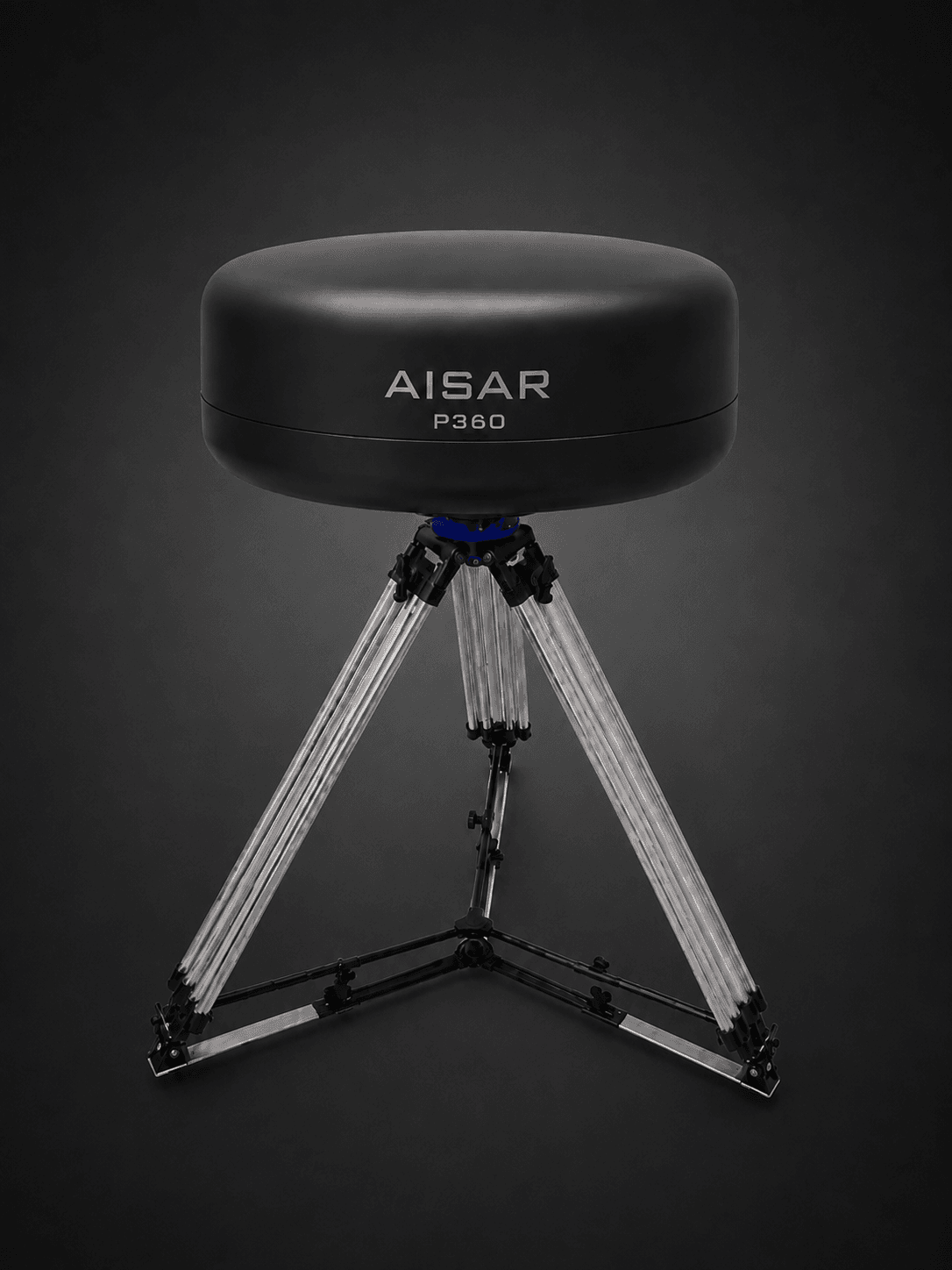
Listens to the electromagnetic spectrum without transmitting. Detects, classifies and locates drone control links, video downlink and telemetry. 37 drone classes identified from RF fingerprints, classified on the node.
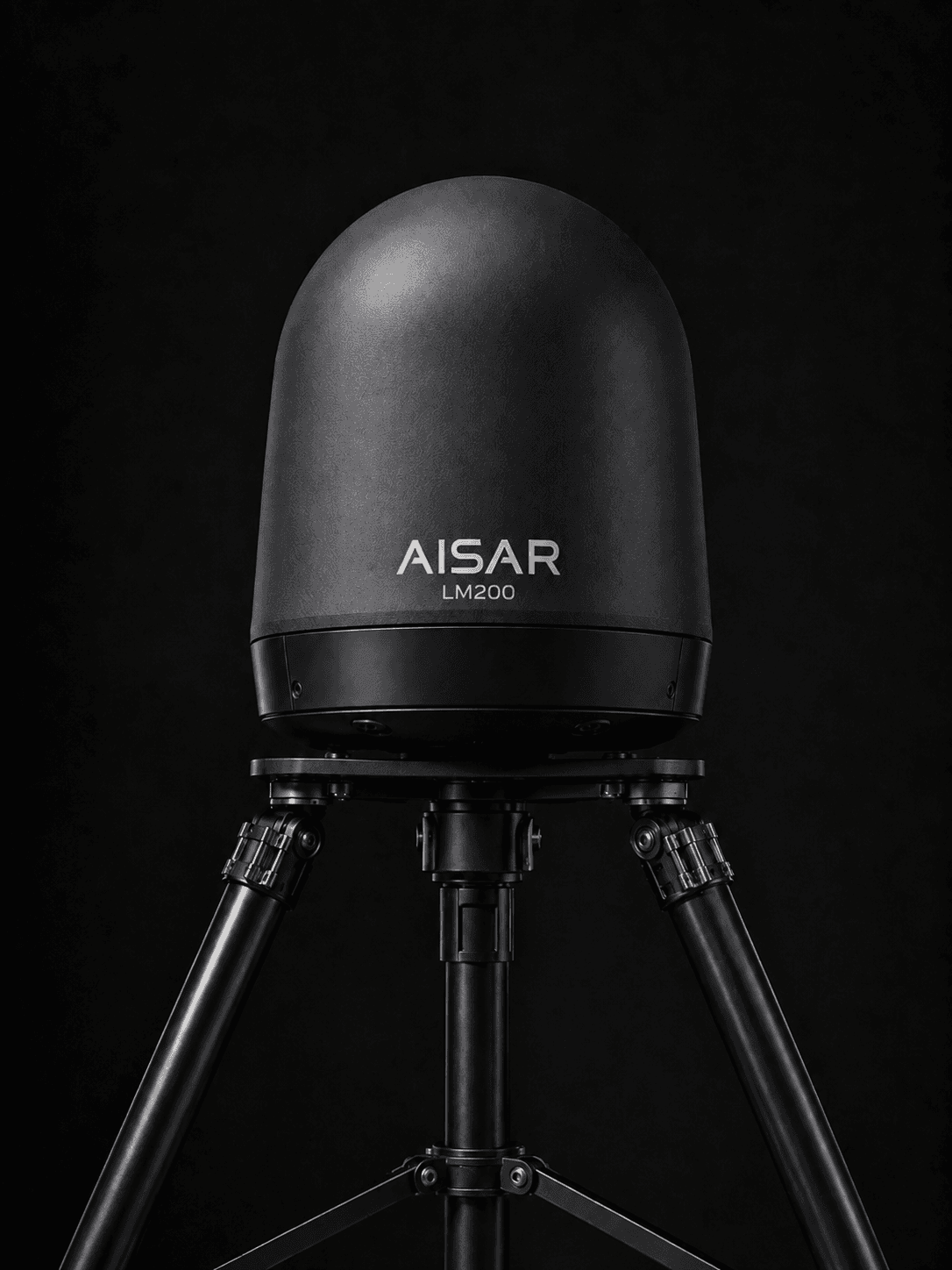
Covers the close-in zone that surveillance radar does not reach. Millimetre-wave resolution at the fence line, on a volume automotive component base.
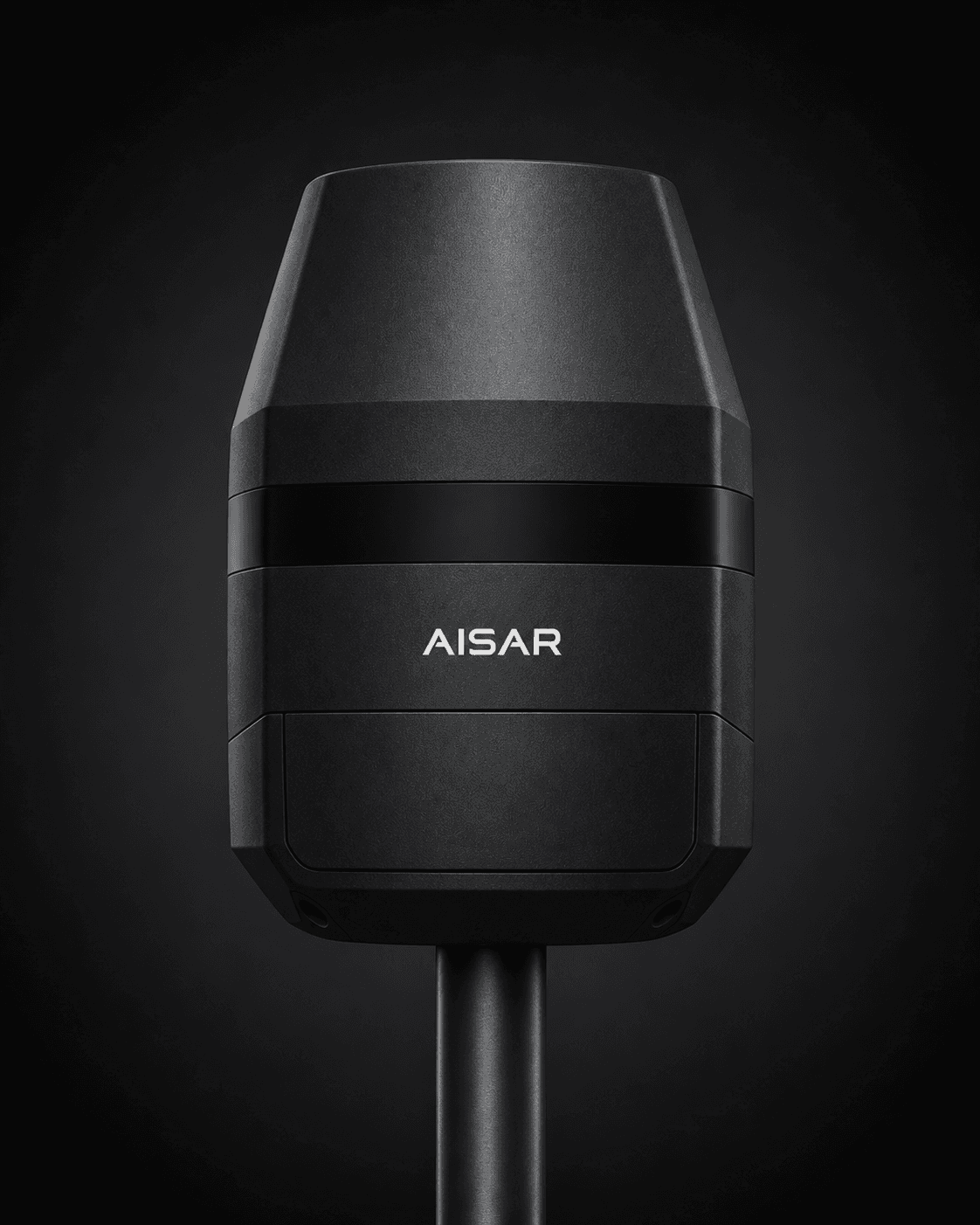
Digital beamforming radar for tracking and hand-off inside the site perimeter. Holds low-RCS targets through the working envelope of the protected area.
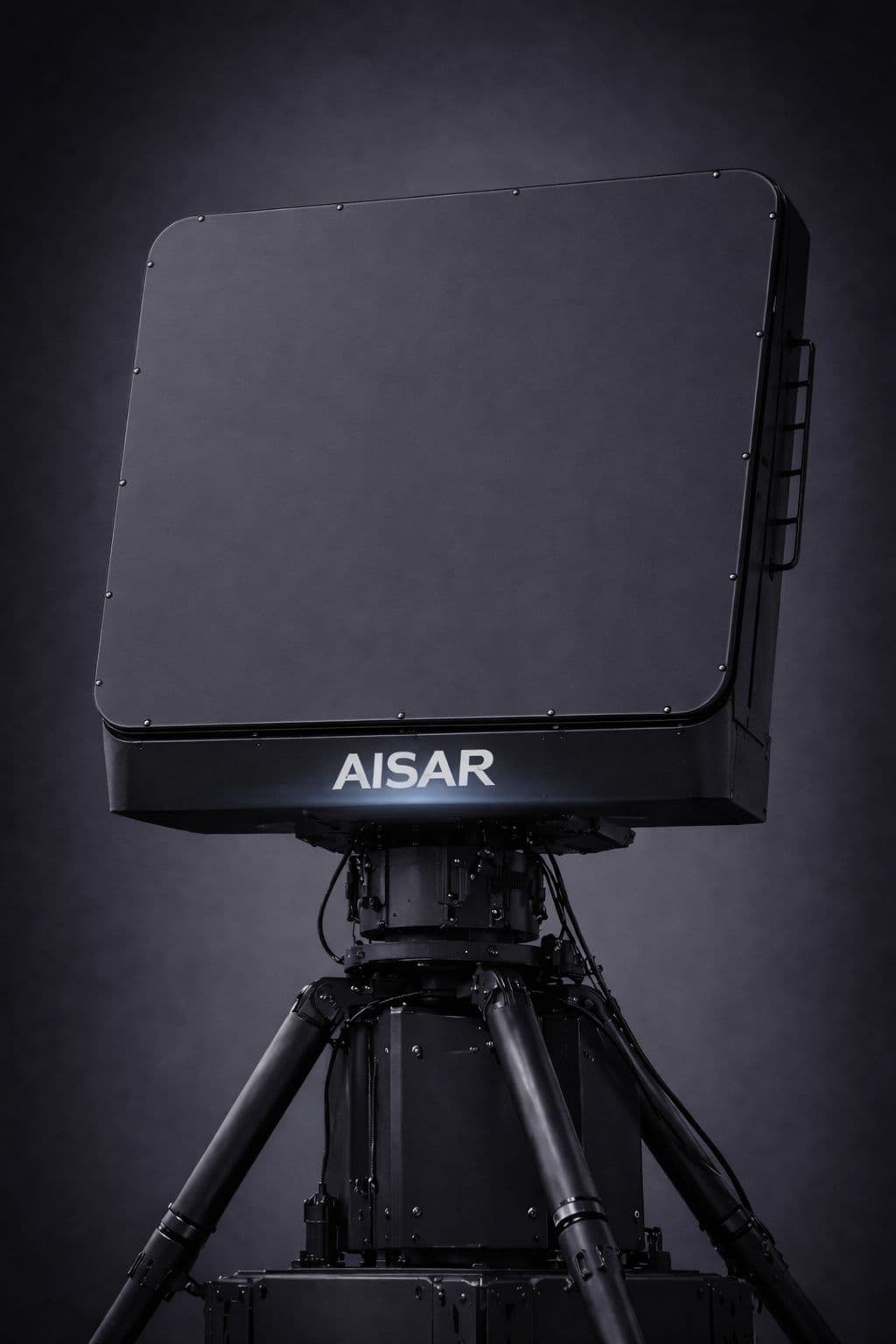
Wide-area early warning for large sites, coastlines and border sections. Establishes the track before the target reaches the perimeter.

3 to 25+ nodes, self-organising and self-healing, GPS-PPS synchronised. TDOA/FDOA geolocation to meter class. The layer that makes four sensors behave as one system.
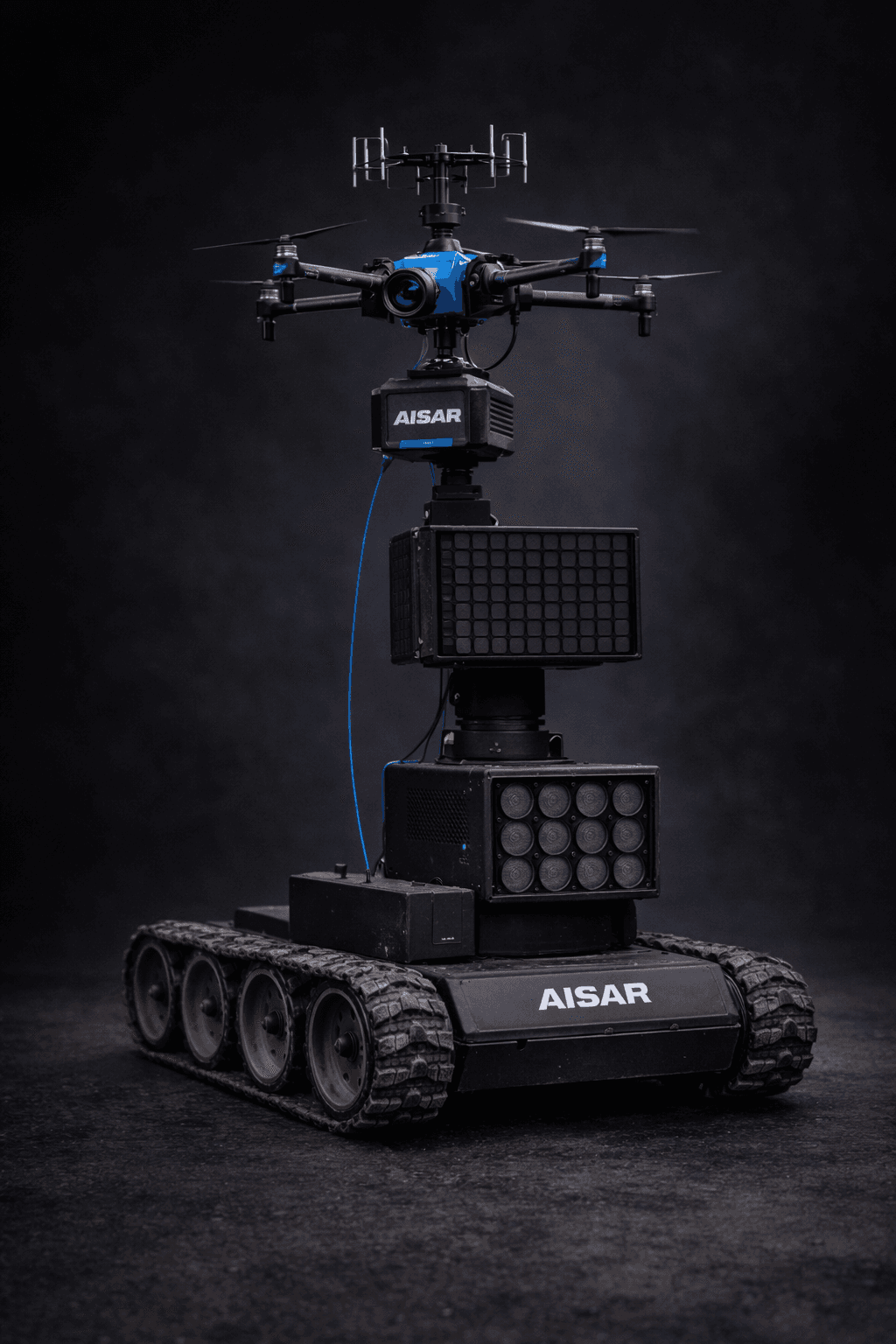
Ground platform carrying the sensor set with acoustic and optical channels and a tethered aerial node at 150 m. Operational in under 15 minutes, edge compute on site, no cloud dependency.
Separate sensors, or one system?
A drone approaching a site crosses several sensing regimes: wide-area early warning, mid-range tracking inside the perimeter, and the close-in zone at the fence line. The common answer is to buy a different system for each and stitch them together at the track level — which is exactly where hand-offs are lost and a target is re-acquired as a new, unknown object.
AISAR does not stitch. One signal-processing pipeline, one tracker, one classification layer and one digital twin run across every band in the line. The target does not become a new detection when it moves from one layer to the next. And it is one supplier, not three contracts and three integration projects.
Transmit as little as the task allows.
The passive layer transmits nothing at all. The active layers transmit only what the task requires — the close-in layer is designed so that nothing is detectable more than a few hundred metres from the object it protects. For a plant, a port or an airport that means no spectrum authorisation for the passive layer, a defined and bounded authorisation path for the active ones, and no interference with the equipment already on site: ATC primary surveillance, plant telemetry, SCADA.
| SPECTRUM AUTHORISATION | PASSIVE MESH | SHORT-RANGE | MID-RANGE | LONG-RANGE |
|---|---|---|---|---|
| EU | Not required — reception only | Harmonised band (mobile configuration) | Individual licence | State assignment |
| United States | Not required — reception only | Licensed by rule (mobile configuration) | Individual licence | State assignment |
| Asia | Not required — reception only | National authorisation | Individual licence | State assignment |
Technical specifications depend on configuration, deployment geometry and site conditions, and are confirmed per project.
Spectrum authorisation is separate from export-control classification. Export-control status is determined by the specific configuration, its technical parameters, the country of destination and the end use.