The track starts before the perimeter does.
AISAR Watch establishes wide-area awareness across large sites, coastlines and border sections — so that by the time a target reaches the boundary of the protected area it is already a track with a history, not a new detection.
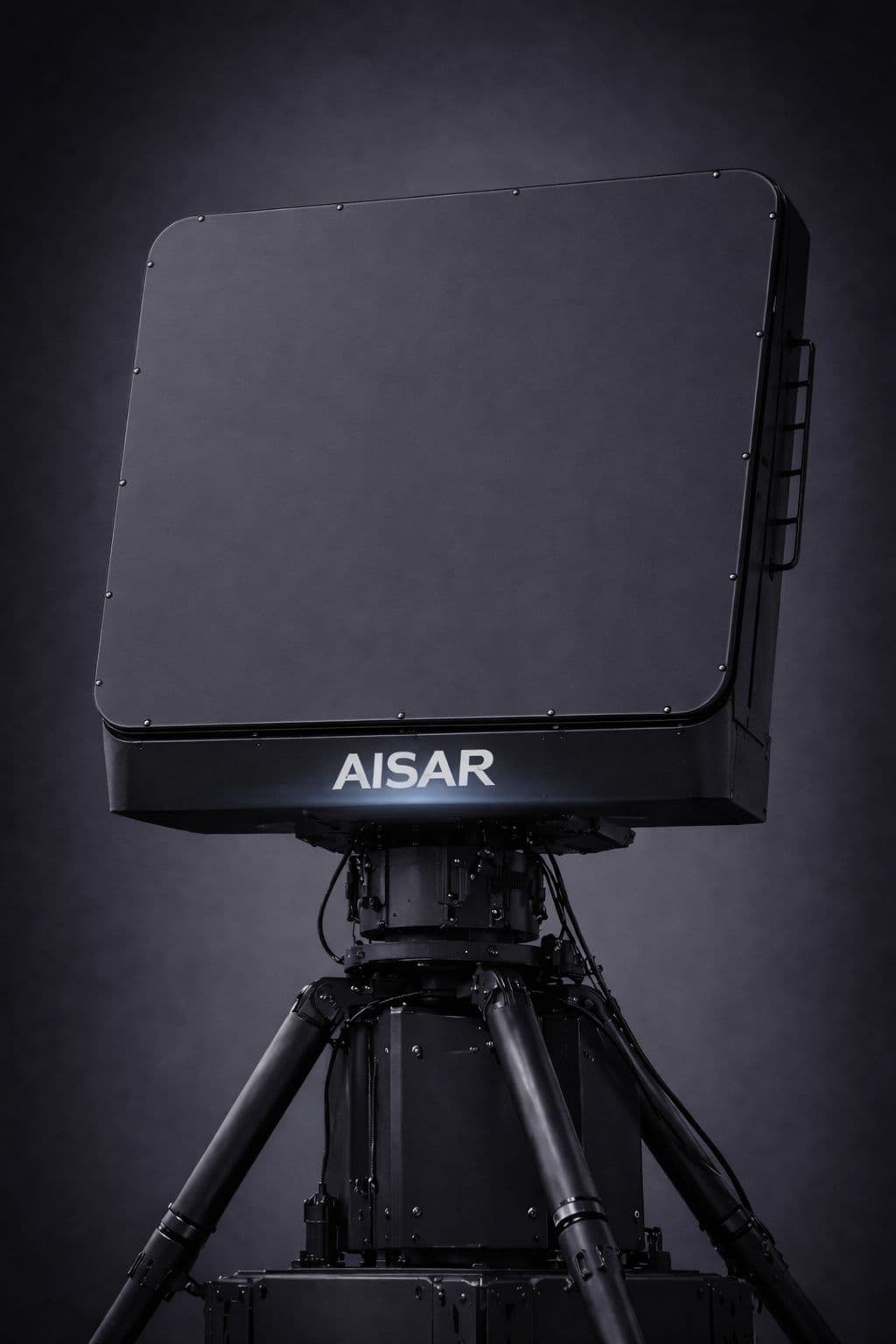
C-band propagation gives range and weather tolerance across open terrain, coastline and long linear borders — the geometries where a short-range sensor network alone is not economic.
A target detected at range enters the same tracker that the mid-range and close-in layers use. By the time it crosses into perimeter coverage it carries heading, speed and classification history.
The track passes from wide-area to perimeter to close-in coverage without re-acquisition, because there is one tracker across all layers rather than three systems exchanging messages.
C-band maintains performance in precipitation conditions where higher-frequency sensors degrade — the operating reality of maritime and coastal deployment.
Technical specifications depend on configuration, deployment geometry and site conditions, and are confirmed per project.
Spectrum authorisation is separate from export-control classification. Export-control status is determined by the specific configuration, its technical parameters, the country of destination and the end use.
Establish early warning at range.
Talk to our team about deploying AISAR Watch at your site.